Ogilvy on Advertising Audio Walkthrough
Ogilvy on Advertising explains how research, positioning, brand image, strong ideas, and disciplined copy turn advertising into sales, giving marketers and business owners practical standards for judging campaigns.
GET THE FULL AUDIO →David Ogilvy challenges the idea that advertising should be judged primarily as entertainment or creative art. Its real purpose, he argues, is to communicate useful information persuasively enough to sell. That begins with product and consumer research, clear positioning, a compelling promise, a consistent brand image, and an enduring big idea. Drawing on tested campaigns, Ogilvy explains how headlines, factual copy, layouts, demonstrations, testimonials, repetition, and direct-response testing influence results across print, television, direct mail, and business-to-business advertising. Entrepreneurs, marketers, and copywriters will learn to replace subjective creative opinions with sharper strategic judgment: understand the buyer, make the product the hero, test meaningful variables, and evaluate advertising by what it communicates and sells.
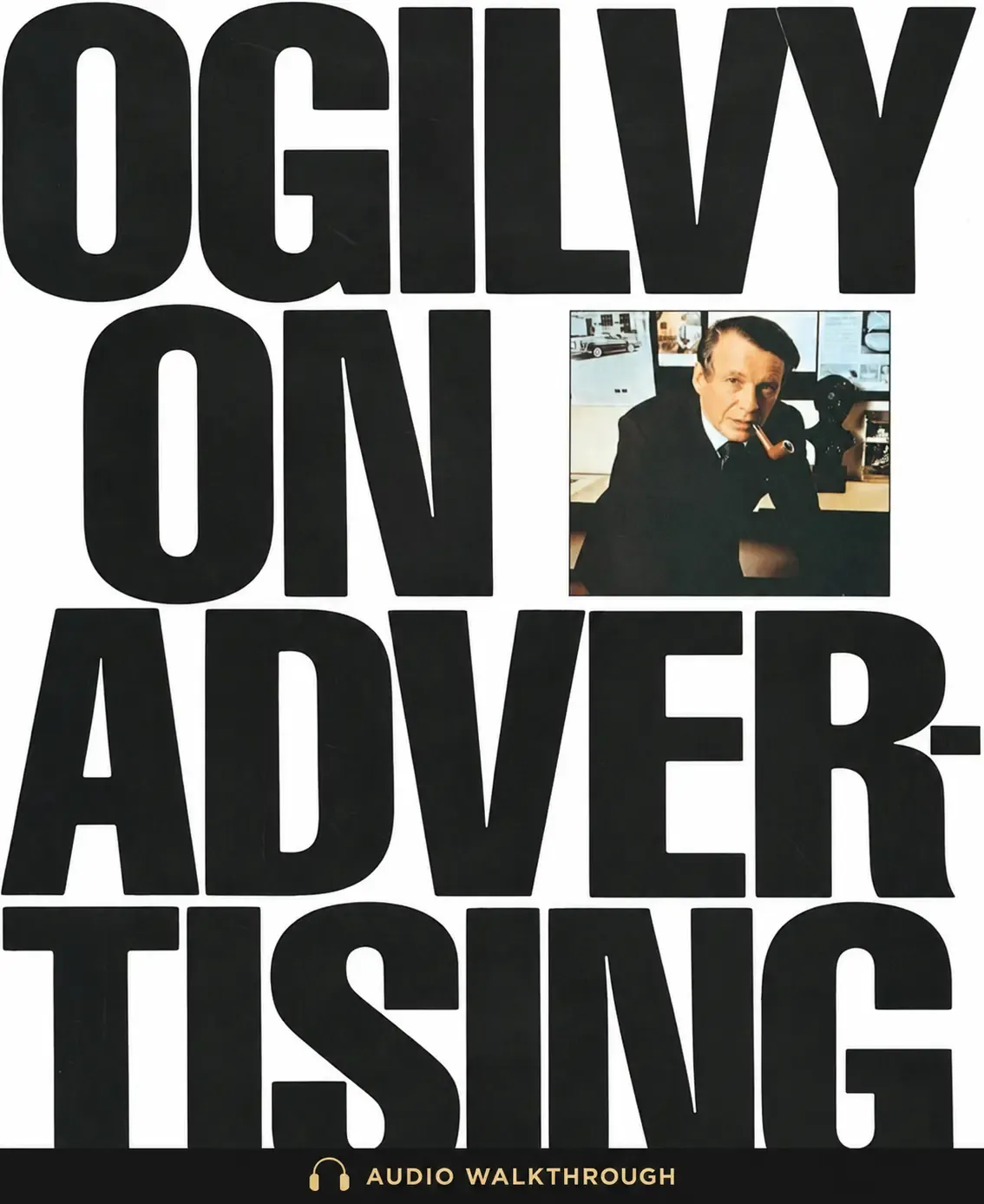
Ogilvy on Advertising Audio Walkthrough
Ogilvy on Advertising explains how research, positioning, brand image, strong ideas, and disciplined copy turn advertising into sales, giving marketers and business owners practical standards for judging campaigns.
David Ogilvy challenges the idea that advertising should be judged primarily as entertainment or creative art. Its real purpose, he argues, is to communicate useful information persuasively enough to sell. That begins with product and consumer research, clear positioning, a compelling promise, a consistent brand image, and an enduring big idea. Drawing on tested campaigns, Ogilvy explains how headlines, factual copy, layouts, demonstrations, testimonials, repetition, and direct-response testing influence results across print, television, direct mail, and business-to-business advertising. Entrepreneurs, marketers, and copywriters will learn to replace subjective creative opinions with sharper strategic judgment: understand the buyer, make the product the hero, test meaningful variables, and evaluate advertising by what it communicates and sells.
What You Get With the Full Audio
A complete, chapter-by-chapter Audio Walkthrough built to help you understand the book in depth and get more from every idea.
Complete Chapter-by-Chapter Coverage
Follow the book from beginning to end, with every chapter explained in sequence so important ideas are not lost along the way.
The Reasoning Behind the Ideas
Understand the context, logic, examples, and explanations behind the author’s ideas instead of only hearing isolated conclusions.
Built Specifically for Listening
Long-form audio designed to be easy to follow while walking, driving, training, commuting, or handling routine work.
Understand Ideas Well Enough to Use Them
Spend enough time with the concepts to see how they connect, what they mean, and where they can become useful in practice.
Hours of Focused Learning
Get the depth needed to properly explore the book instead of compressing its strongest ideas into just a few minutes.