The Innovator’s Dilemma Audio Walkthrough
Understand why well-managed companies lose ground to simpler, cheaper innovations—and how entrepreneurs and business owners can recognize disruptive opportunities before emerging competitors challenge established markets.
GET THE FULL AUDIO →
Why do successful companies fail even when they listen to customers, invest in innovation, and make seemingly sound business decisions? Clayton M. Christensen explains how established businesses become vulnerable to disruptive technologies that initially offer lower performance, smaller markets, and thinner profit margins. As these alternatives improve, they can eventually challenge established industry leaders.
Drawing on research from the disk drive, steel, retail, and computer industries, the book distinguishes sustaining innovation from disruptive innovation and examines how customer demands, resource allocation, and organizational capabilities influence business decisions. It introduces autonomous organizations, discovery-based planning, and strategies for navigating uncertain emerging markets. Entrepreneurs, marketers, and business owners will better understand how to evaluate disruptive opportunities, recognize changing customer needs, and balance existing business priorities with future growth.
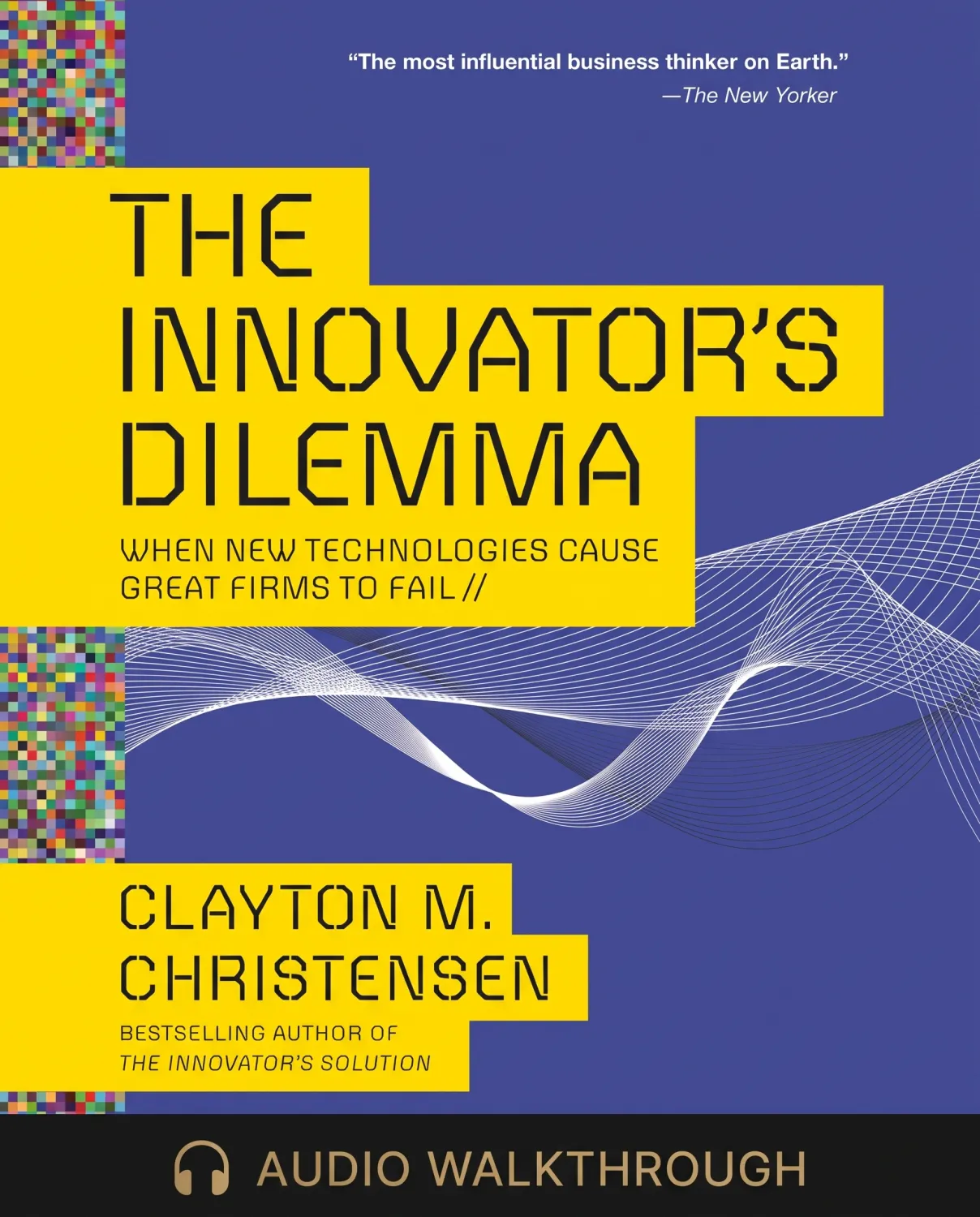
The Innovator’s Dilemma Audio Walkthrough
Understand why well-managed companies lose ground to simpler, cheaper innovations—and how entrepreneurs and business owners can recognize disruptive opportunities before emerging competitors challenge established markets.
Why do successful companies fail even when they listen to customers, invest in innovation, and make seemingly sound business decisions? Clayton M. Christensen explains how established businesses become vulnerable to disruptive technologies that initially offer lower performance, smaller markets, and thinner profit margins. As these alternatives improve, they can eventually challenge established industry leaders.
Drawing on research from the disk drive, steel, retail, and computer industries, the book distinguishes sustaining innovation from disruptive innovation and examines how customer demands, resource allocation, and organizational capabilities influence business decisions. It introduces autonomous organizations, discovery-based planning, and strategies for navigating uncertain emerging markets. Entrepreneurs, marketers, and business owners will better understand how to evaluate disruptive opportunities, recognize changing customer needs, and balance existing business priorities with future growth.
What You Get With the Full Audio
A complete, chapter-by-chapter Audio Walkthrough built to help you understand the book in depth and get more from every idea.
Complete Chapter-by-Chapter Coverage
Follow the book from beginning to end, with every chapter explained in sequence so important ideas are not lost along the way.
The Reasoning Behind the Ideas
Understand the context, logic, examples, and explanations behind the author’s ideas instead of only hearing isolated conclusions.
Built Specifically for Listening
Long-form audio designed to be easy to follow while walking, driving, training, commuting, or handling routine work.
Understand Ideas Well Enough to Use Them
Spend enough time with the concepts to see how they connect, what they mean, and where they can become useful in practice.
Hours of Focused Learning
Get the depth needed to properly explore the book instead of compressing its strongest ideas into just a few minutes.